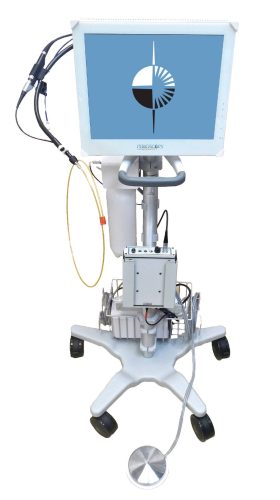
With the latest Perioscope now available in my practice, I’m able to treat my patients who have periodontal disease better than ever before.
Perioscopy, the procedure performed with the Perioscope, is a non-surgical procedure that allows me to treat and diagnose areas below the gum line that are affected by periodontal disease by using advanced video, lighting, and magnification technology. In most circumstances, it can also avert the need for gum surgery.
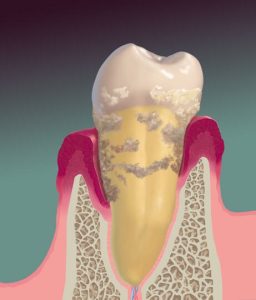
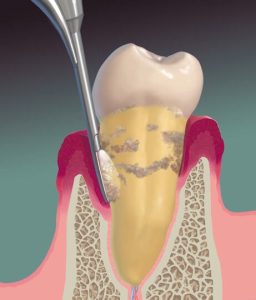
The miniature dental endoscope on the Perioscope displays a magnified image (24-48x) on a video screen, allowing me to clearly see any tartar you may have directly on the root of the affected tooth in large detail. I can then precisely and proficiently remove the tartar in a more efficient and thorough manner than using traditional periodontal instruments.
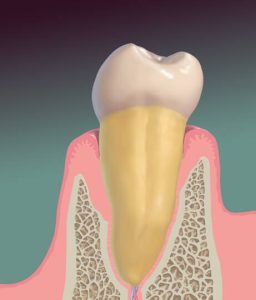
The ultimate goal of this minimally invasive procedure is to get the root of the affected tooth exceptionally clean and reduce the advancement of periodontal disease, as well as the need for additional periodontal treatments in the future.
The Benefits of Perioscopy
Perioscopy is of great benefit to our patients. Believe it or not, traditional scaling and root planing, which is the standard level of care for periodontal disease, is a blind procedure! With the traditional process, we are not able to see the tartar on the root. I don’t know of any other procedure in medicine or dentistry that is performed without vision.
Periodontal research shows that after typical scaling and root planing (without the Perioscope), up to 30% of tooth surfaces still have tartar – which means you’re still at risk of your case of periodontal disease progressing. This significantly limits the goal of non-surgical pocket reduction and generally leads to the recommendation for surgical treatment in the future. Traditional surgical techniques often result in significant gum tissue recession, loss of gum tissue between teeth (which is often unsightly and a food trap), and root sensitivity.
I have had great success using a minimally invasive approach to treat advanced periodontal disease. Using high magnification for vision; Perioscope or Microscope, combined with laser periodontal treatment (Periolase), I am able to achieve pocket elimination, improve your oral health, and preserve your smile. Many patients come to our practice for a second opinion regarding their diagnosis of periodontal disease because of the specialized technology we use. They are often surprised that their condition can be treated non-surgically and also result in tooth retention.
The images below show the precision the Perioscope offers during periodontal procedures.
Caring for Your Oral Health Like No One Else
I know there are a lot of periodontists to choose from in the city, but in our practice, we are committed to consistently employing the most state-of-the-art technologies to help our patients get back to having healthy and happy smiles.
The Perioscope is just one of the leading technologies I use in my practice. Additional cutting edge technologies and procedures I use are microsurgery (which uses microscopes and micro-instruments for procedures, allowing for more precise treatment, and a faster recovery time), as well as 3D imaging for patients desiring dental implants, LANAP® laser surgery for targeting bacteria more effectively, and Piezo surgery as an alternative to a traditional dental drill.
Why Choose Our Practice
In addition to the advanced procedures and technology we use, we believe we can best help you because of our passion for providing periodontal care. My background is unique in that I was originally a general dentist, but my interest in periodontics led me to pursue additional education and training to become a Board Certified periodontist.