What Is The Difference Between Gingivitis And Periodontal Disease?
Whether you’ve heard the terms “gingivitis” and “periodontal disease” from toothpaste ads or from your general dentist, you may be wondering if the two words

Whether you’ve heard the terms “gingivitis” and “periodontal disease” from toothpaste ads or from your general dentist, you may be wondering if the two words

New York City residents have a wide variety of local periodontists to choose from. After all, they live in the Big Apple. There’s a world

If you’ve met with a general dentist, or New York City’s periodontist Dr. Kissel, and found out that you have periodontal disease, you might be

If you’ve been told that you have periodontal disease, treatment planning should start immediately. By acting quickly and diligently, periodontal disease can be reversed, restoring

New York City residents considering dental implants should know that they are, by and large, wildly successful. In fact, the most current data shows that

Many of Dr. Kissel’s New York City patients who consult with him about dental implants are, understandably, curious about how they need to care for

For New York City dental implants patients who’ve been missing teeth for quite some time before deciding to have them replaced, rebuilding jaw bone tissue,

So you’ve been diagnosed with periodontal disease. We know how discouraged you must be. Having to deal with a dental health condition is frustrating in

If you live in New York City and you have loose or missing teeth or need to have a tooth or teeth removed due
Open Hours
Monday to Friday
8:30am – 5pm
Periodontal disease, also known as gum disease, is a serious infection of the gums that can lead to tooth loss if not treated properly. It begins with the accumulation of plaque, a sticky film of bacteria that forms on the teeth, which can cause inflammation and infection in the surrounding gum tissue.
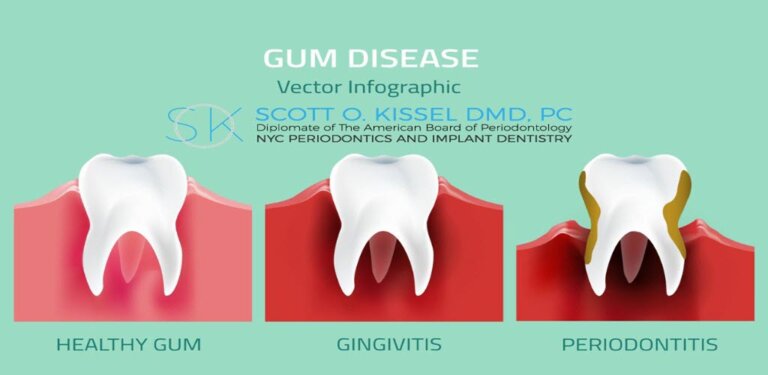
There are two main stages of periodontal disease: gingivitis and periodontitis. Gingivitis is the early stage, characterized by red, swollen gums that may bleed during brushing. If left untreated, it can progress to periodontitis, where the inflammation can destroy the bone and tissue supporting the teeth, making it critical for individuals to seek regular dental check-ups and maintain good oral hygiene.
Regular dental check-ups are essential for maintaining optimal oral health and preventing periodontal disease. During these visits, your periodontist can identify early signs of gum disease and provide necessary treatments before the condition worsens.
In addition to checking for periodontal disease, dental check-ups allow for professional cleanings that remove plaque and tartar buildup that regular brushing cannot eliminate. These visits also provide an opportunity for patients to discuss any concerns they may have and receive personalized advice on maintaining their oral health.
Recent advancements in dental technology have led to innovative treatments for periodontal disease that enhance patient outcomes. Treatments such as LANAP (Laser-Assisted New Attachment Procedure) utilize laser technology to target infected gum tissue while preserving healthy tissue, resulting in less discomfort and quicker recovery times.
Other options include regenerative procedures that promote the growth of new bone and tissue, such as bone grafts and guided tissue regeneration. These treatments not only address the current effects of periodontal disease but also help restore the structural integrity of the mouth, improving overall dental health.
Hearing from patients who have undergone periodontal treatments can provide valuable insights into the effectiveness of various procedures. Many patients report significant improvements in their oral health and quality of life after receiving care for periodontal disease.
For instance, individuals who have received LANAP treatment often share their experiences of minimal pain and rapid healing, allowing them to return to their daily routines quickly. These testimonials can help prospective patients feel more confident in seeking treatment and understanding the potential benefits of addressing their periodontal health.